

Why Fibre Is More Important Than You Think


When people talk about nutrition, the conversation usually revolves around protein, calories, carbohydrates, fats and supplements.
But there is one important part of our diet that often gets overlooked: fibre.
Fibre isn't flashy. You won't see someone posting on Instagram about their incredible fibre intake the way they might post about protein or creatine.
But if you're an adult trying to lose body fat, improve digestion, control hunger, support your health and maintain a healthy body weight, fibre should be a major part of your diet.
At FullBody Athletics, I always tell our members that nutrition doesn't have to be complicated. Sometimes, improving your health starts with something as simple as eating more vegetables, fruits, legumes and whole grains.
So let's talk about why fibre matters—and how you can get more of it without completely changing your diet.
What Exactly Is Fibre?

Fibre is a type of carbohydrate that your body doesn't fully digest.
Unlike other carbohydrates, fibre passes through much of your digestive system without being broken down and absorbed like sugar or starch.
There are two main types:
Soluble fibre
dissolves in water and forms a gel-like substance in your digestive system. It can help slow digestion, support healthy blood cholesterol levels and help regulate blood sugar.
Insoluble fibre

Adds bulk to your stool and helps food move through your digestive system. This type is particularly important for maintaining regular bowel movements.
Most high-fibre foods contain a combination of both types.
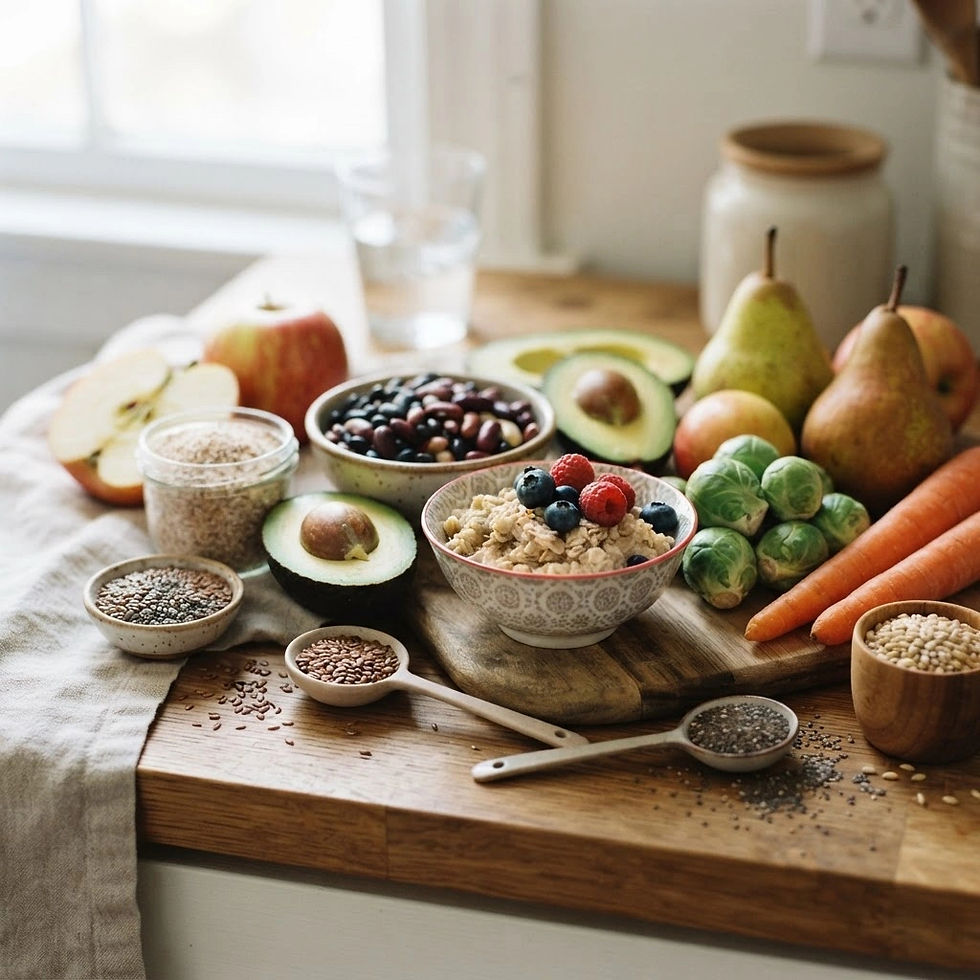
Good sources include:
Vegetables
Fruits
Berries
Beans and lentils
Oats
Whole grains
Chia and flax seeds
Nuts and seeds
Potatoes and sweet potatoes
And this brings me to an important point:
Fibre comes primarily from whole foods.
That's one reason I encourage people to build their diet around minimally processed foods rather than relying heavily on supplements or "health" products.
Fibre Can Help You Feel Fuller

If your goal is to lose fat, one of the biggest challenges isn't necessarily knowing what to eat.
It's sticking to your calorie intake consistently.
Hunger can make that difficult.
This is where fibre can be extremely useful.
High-fibre foods generally take longer to eat and digest, and many high-fibre foods contain a lot of volume relative to their calories.
Think about the difference between eating a small pastry and eating a large bowl of vegetables, potatoes and lean protein.
The calories might be similar depending on the foods and portions, but the second meal can provide significantly more volume and fibre.
This can help you feel more satisfied after eating.
And when you're less hungry throughout the day, it becomes much easier to stay consistent with your nutrition.
Fibre doesn't magically burn fat.
But it can make a calorie-controlled diet much easier to follow.
Fibre Is Important for Your Digestive Health
Let's talk about something that isn't always the most exciting topic—but is extremely important.
Your digestion.
Fibre helps support regular bowel movements and healthy digestive function.
If your diet is very low in fibre, you may experience constipation or irregular bowel movements.
Increasing fibre gradually, along with drinking enough fluids, can help improve this for many people.
There is also another interesting aspect of fibre.
Some types of fibre are fermented by bacteria in your large intestine.
These bacteria produce compounds called short-chain fatty acids, which play important roles in your gut environment and overall health.
This is one reason your diet can influence much more than just your waistline.
What you eat also influences the environment inside your digestive system.
Fibre Can Support Heart and Metabolic Health
A high-fibre diet is also associated with several important health benefits.
Certain types of soluble fibre can help reduce the absorption of cholesterol in the digestive tract and support healthier blood cholesterol levels.
Fibre-rich foods can also slow the digestion and absorption of carbohydrates, which can help moderate blood sugar responses after meals.
This doesn't mean that fibre makes an unhealthy diet healthy.
You can't eat fast food all day and simply add a fibre supplement to cancel it out.
Instead, think about the bigger picture.
A diet containing plenty of vegetables, fruits, legumes, whole grains, lean proteins and healthy fats gives your body a much better nutritional foundation.
How Much Fibre Do You Need?

A common target for adults is around 25–38 grams of fibre per day, depending on factors such as sex and age.
Unfortunately, many people don't come close to that amount.
And here's where I see a common mistake:
Someone realizes they're not eating enough fibre and suddenly decides to double their intake overnight.
That can be a problem.
If your body isn't used to a lot of fibre, suddenly eating huge amounts can lead to bloating, gas and digestive discomfort.
Instead, increase your fibre intake gradually.
For example:
Breakfast: Add berries and chia seeds to oatmeal or yogurt.
Lunch: Add a large serving of vegetables to your meal.
Snack: Have a piece of fruit instead of a highly processed snack.
Dinner: Include vegetables and a fibre-rich carbohydrate such as potatoes, beans, lentils or whole grains.
Small changes throughout the day can add up quickly.
Don't Forget About Water
Here's something important:
If you increase your fibre intake, make sure you're also drinking enough fluids.

Fibre absorbs water, and your digestive system needs adequate fluid to function properly.
If you're eating significantly more fibre but not drinking enough water, you may actually feel more uncomfortable.
So don't just focus on the number of grams of fibre.
Look at your overall habits.
Fibre + fluids + movement + a balanced diet = a much better foundation for digestive health.
Should You Take a Fibre Supplement?
Sometimes a fibre supplement can be useful.
But I wouldn't make it your first solution.
My first question would be:
"Why aren't you getting enough fibre from your food?"
If your diet contains very few vegetables, fruits, legumes or whole grains, adding a fibre powder isn't necessarily solving the underlying problem.
Start with your food.
Build better habits.
Then, if you still struggle to reach your fibre target, a supplement may be something to discuss with a qualified healthcare professional.
The Bottom Line
Fibre isn't a miracle weight-loss ingredient.
It's not a supplement that will suddenly transform your body.
But it is one of those simple nutritional fundamentals that can have a major impact over time.
It can help you feel fuller, support digestion, contribute to healthy cholesterol levels, support blood sugar regulation and provide fuel for beneficial gut bacteria.
And perhaps most importantly, increasing fibre usually means you're eating more of the foods we should already be eating more of:
vegetables, fruits, legumes, whole grains, seeds and other minimally processed foods.
If you're currently eating very little fibre, don't try to become perfect overnight.
Start with one simple change.
Add a serving of vegetables to your lunch.
Have fruit with your snack.
Add berries and chia seeds to your breakfast.
Choose a whole-grain option.
Then build from there.
Your nutrition doesn't need to be perfect. It needs to be consistent.
if you're interested in eating more Fibre and better your digestion, come and try our FBA FIBRE CHALLENGE.
Paper in front for inscription :)
And sometimes, improving your health isn't about finding the newest supplement or the newest diet.
It's about getting the basics right.
Fibre is one of those basics.
Love and Peace
FullBody Athletics


Comments